
A single meal will not switch chronic inflammation off, but the pattern of what lands on your plate every day has a measurable effect on it. That distinction, pattern over single food, is the difference between eating advice that actually works and advice that sounds good but does nothing.
This guide walks through what inflammation actually is, which foods research consistently links to lowering it, which foods tend to drive it up, and how a realistic eating pattern, not a rigid 30-day plan, fits into daily life.
TL;DR: Anti-inflammatory foods include fatty fish, berries, leafy greens, nuts, olive oil, whole grains, and spices like turmeric and ginger. They work by supplying omega-3 fatty acids, polyphenols, and antioxidants that calm inflammatory signaling. Pairing these foods with fewer refined carbs, fried foods, and processed meats, consistently, not occasionally, is what actually lowers chronic inflammation over weeks to months.
What Is Inflammation? Acute vs. Chronic Inflammation
Inflammation is your immune system’s response to injury, infection, or irritation, and in its short-term form it is protective, not harmful.
When you sprain an ankle or catch a cold, your body sends immune cells to the site, causing redness, heat, swelling, or fever. This is called acute inflammation, and it typically resolves within days once the threat is dealt with. It is the immune system doing exactly what it is supposed to do.
Acute inflammation follows a predictable arc: a trigger appears, immune cells rush in, the threat is cleared, and the response winds down. Swelling around a cut, for example, is fluid and immune cells working to prevent infection and start tissue repair, uncomfortable, but purposeful and temporary.
Chronic inflammation, by contrast, is a low-grade immune response that persists for months or years, often without the obvious symptoms of an acute flare-up.
It can be triggered by ongoing factors such as excess body fat, prolonged stress, poor sleep, smoking, or a diet heavy in refined carbohydrates and processed foods. Instead of protecting tissue, this drawn-out immune activity can gradually damage it.
Two markers doctors commonly use to gauge this activity are C-reactive protein (CRP), a substance the liver produces in response to inflammation, and cytokines, which are signaling proteins immune cells use to communicate with each other. Elevated levels of both are associated with ongoing inflammatory activity, though neither on its own diagnoses a specific condition.
How Chronic Inflammation Affects Your Body
Chronic inflammation is associated with a higher risk of several long-term conditions because it can gradually damage blood vessels, joints, and other tissues over years of low-level immune activity.
In blood vessels, persistent inflammation is thought to contribute to the buildup of arterial plaque, a process linked to heart disease. Immune cells drawn to the artery wall can accumulate cholesterol over time, forming deposits that narrow the vessel and make it more likely to rupture, which is one of the mechanisms researchers associate with heart attacks and strokes.
In the pancreas and muscle tissue, ongoing inflammatory signaling can interfere with how cells respond to insulin, the hormone responsible for moving glucose out of the bloodstream and into cells. When cells become less responsive to insulin, a state called insulin resistance, blood sugar stays elevated for longer, which researchers associate with a higher risk of developing type 2 diabetes.
In joints, inflammatory cytokines can wear down cartilage over time, a process connected to arthritis. Cartilage has limited capacity to repair itself, so repeated low-grade inflammatory activity around a joint can gradually erode the cushioning tissue, contributing to the stiffness and discomfort associated with osteoarthritis and other joint conditions.
Emerging research also points to a relationship between chronic inflammation and both depression and cognitive decline, though scientists describe this as an association rather than a fully proven cause-and-effect chain. One working theory is that inflammatory cytokines circulating in the bloodstream can affect brain chemistry and neuron function, but researchers caution that mood and cognition are influenced by many interacting factors beyond diet.
Gut health is part of this picture too. A diet low in fiber and high in ultra-processed food can alter the balance of bacteria in the digestive tract, a state sometimes called dysbiosis, which some researchers link to increased intestinal permeability and low-grade systemic inflammation. This is one reason gut health, weight management, and inflammation are frequently discussed together in nutrition research rather than as separate topics, improving one tends to have knock-on effects on the other two.
None of this means a single inflammatory meal causes disease. It means the cumulative pattern, sustained over years, is one contributing factor among several, alongside genetics, physical activity, sleep, and stress. Diet is a lever you can control day to day; it is not the only variable in the equation.
Signs You May Have Chronic Inflammation
Common signs linked to chronic inflammation include persistent fatigue, joint pain or stiffness, digestive discomfort, and recurring skin issues, though none of these symptoms is specific to inflammation on its own.
- Fatigue that doesn’t improve with rest or sleep
- Joint pain, stiffness, or swelling that lingers
- Digestive issues such as bloating, discomfort, or irregular bowel habits
- Skin issues, including unexplained rashes or breakouts
- Frequent low-grade infections or slow wound healing
These signs tend to be diffuse and easy to attribute to something else, a busy week, poor sleep, or getting older, which is part of why chronic inflammation often goes unrecognized for a long time. It’s the pattern and persistence of symptoms, rather than any single one in isolation, that’s worth paying attention to.
This list is for general education only and is not a diagnostic tool. These symptoms can also stem from many other causes. If you’re experiencing persistent symptoms, speak with a healthcare provider, who can order appropriate testing and give you a proper evaluation.
Top Anti-Inflammatory Foods
The foods most consistently linked to lower inflammation share a few traits: they’re rich in omega-3 fatty acids, polyphenols, fiber, or antioxidants, and they’re minimally processed.
These same foods tend to show up in guidance for weight management, gut health, and heart health, which is not a coincidence, fiber-rich, minimally processed foods support a healthy gut microbiome, help regulate appetite, and reduce the excess body fat that itself drives inflammatory activity. People managing autoimmune conditions, where the immune system is already overactive, are sometimes advised by their care team to pay particular attention to this same food pattern, though any specific dietary approach for an autoimmune condition should be guided by a doctor or dietitian rather than general articles.
Fatty Fish
Fatty fish such as salmon, sardines, mackerel, and anchovies are among the richest dietary sources of omega-3 fatty acids, specifically EPA and DHA, which the body uses to produce signaling molecules that help resolve inflammation rather than prolong it.
Regularly including fatty fish in the diet, roughly two servings a week is a commonly cited target in nutrition guidance, is one of the more consistently supported dietary strategies for supporting lower systemic inflammation.
Berries and Colorful Fruits
Berries, cherries, and citrus fruits are dense in polyphenols and antioxidants, plant compounds that help neutralize oxidative stress, a process closely intertwined with inflammatory activity.
Blueberries and cherries in particular contain anthocyanins, the pigments responsible for their deep color, which research associates with reduced inflammatory markers in some studies.
Leafy Greens and Cruciferous Vegetables
Spinach, kale, broccoli, and Brussels sprouts supply vitamin K, fiber, and sulfur-containing compounds called glucosinolates. Vitamin K in particular is thought to help regulate inflammatory pathways, while the high fiber content supports a healthy gut microbiome, which itself plays a role in regulating immune and inflammatory responses.
Nuts and Seeds
Walnuts, almonds, flaxseed, and chia seeds provide a combination of plant-based omega-3s, fiber, and healthy fats. Walnuts specifically contain alpha-linolenic acid (ALA), a plant-derived omega-3 that the body partially converts to the same anti-inflammatory compounds found in fish.
Olive Oil and Healthy Fats
Extra-virgin olive oil contains oleocanthal, a compound that has been compared to anti-inflammatory medications in how it affects certain inflammatory pathways, alongside monounsaturated fats that support heart health.
It’s the primary fat source in the Mediterranean diet, a pattern strongly associated with lower markers of inflammation in long-term population studies.
Whole Grains and Legumes
Oats, quinoa, brown rice, lentils, and beans are high in fiber, which feeds beneficial gut bacteria that in turn produce short-chain fatty acids linked to reduced inflammation. Whole grains also cause a slower rise in blood sugar than refined grains, which matters because blood sugar spikes are associated with increased inflammatory signaling.
Spices: Turmeric, Ginger, and Garlic
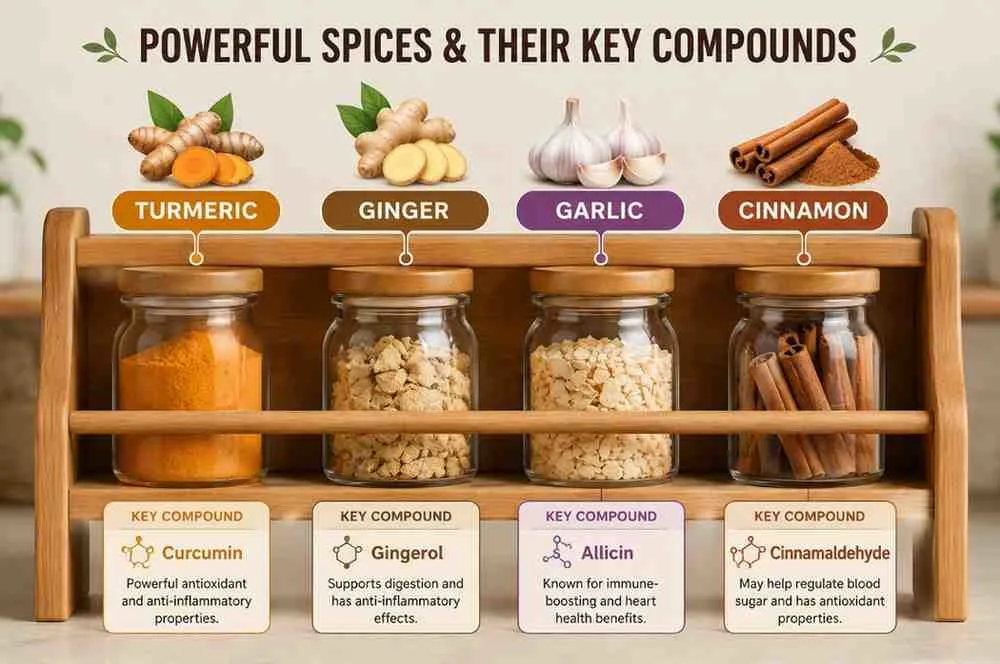
Turmeric contains curcumin, ginger contains gingerol, and garlic contains allicin, three compounds studied for their potential to influence inflammatory pathways in the body.
Curcumin absorbs poorly on its own, which is why it’s often paired with black pepper (which contains piperine) to improve uptake. These spices are best thought of as flavorful additions to an already balanced diet, not stand-alone remedies.
| Spice | Key Compound | How It May Help |
| Turmeric | Curcumin | May help calm inflammatory signaling pathways |
| Ginger | Gingerol | Associated with reduced markers of inflammation |
| Garlic | Allicin | Linked to immune-modulating effects |
| Cinnamon | Cinnamaldehyde | May support healthy blood sugar and reduce oxidative stress |
| Black pepper | Piperine | May enhance curcumin absorption when paired with turmeric |
Anti-Inflammatory Beverages: Green Tea and Coffee
Green tea is rich in EGCG (epigallocatechin gallate), a catechin studied for its antioxidant and anti-inflammatory properties, while coffee in moderate amounts has been associated with lower levels of certain inflammatory markers in several population studies.
Moderation matters for both, excessive caffeine can disrupt sleep, and poor sleep is itself linked to higher inflammation, which can offset any benefit.
What Foods Cause Inflammation in the Body?
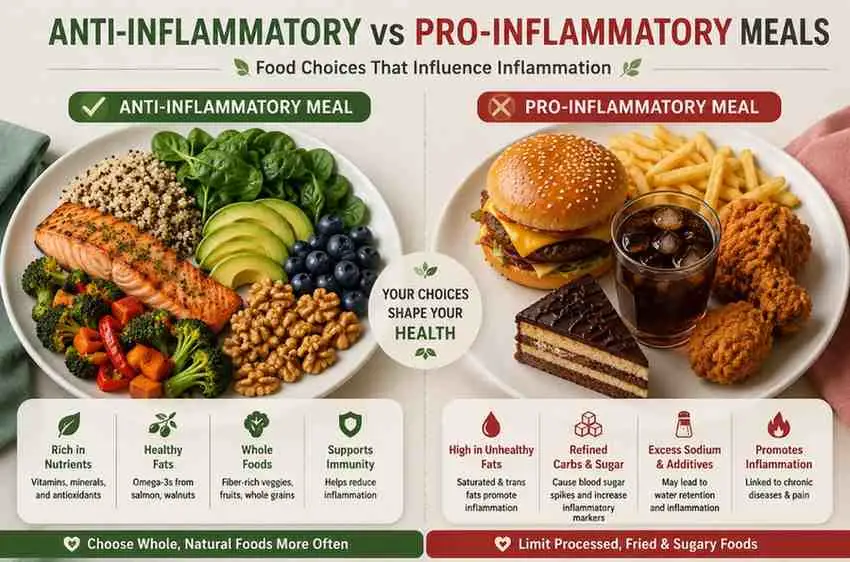
Foods most consistently linked to increased inflammation are refined carbohydrates, fried foods, sugary drinks, processed and red meat, and foods high in trans fats.
Refined carbohydrates, such as white bread and pastries, cause rapid spikes in blood sugar, which research associates with increased production of inflammatory cytokines. Fried foods are often cooked in oils that degrade at high heat, forming compounds linked to oxidative stress.
Sugary drinks contribute to both excess calorie intake and blood sugar spikes. Processed and red meat, especially cured or smoked varieties, contain compounds studied for their association with inflammatory markers in observational research. Trans fats, found in some margarines and packaged baked goods, are one of the most consistently flagged dietary contributors to inflammation across nutrition research.
| Anti-Inflammatory Foods | Pro-Inflammatory Foods |
| Fatty fish (salmon, sardines, mackerel) | Fried foods (french fries, fried chicken) |
| Berries, cherries, oranges | Sugary drinks and sodas |
| Leafy greens (spinach, kale) | Refined carbohydrates (white bread, pastries) |
| Broccoli and other cruciferous vegetables | Processed and red meat (sausages, bacon) |
| Nuts and seeds (walnuts, flaxseed, chia) | Trans fats (margarine, packaged baked goods) |
| Extra-virgin olive oil | Excess alcohol |
| Whole grains and legumes | Refined vegetable oils used in deep frying |
| Turmeric, ginger, garlic | Excess added sugar in packaged snacks |
| Green tea and coffee (in moderation) | Highly processed ready-to-eat meals |
The Mediterranean Diet Connection
The Mediterranean diet is widely regarded by nutrition researchers as the most well-studied model of anti-inflammatory eating, largely because it combines nearly all the food categories linked to lower inflammation into one sustainable pattern.
Its core principles include olive oil as the primary fat, generous vegetables and fruit, whole grains, legumes, nuts, moderate fish intake, limited red meat, and minimal ultra-processed food. It’s less a strict rulebook than a general ratio: mostly plants and healthy fats, fish more often than red meat, and whole foods over packaged ones.
Long-term studies on populations following Mediterranean-style eating patterns have repeatedly found associations with lower inflammatory markers and reduced risk of cardiovascular disease, which is part of why many dietitians recommend it as a practical, evidence-backed starting point rather than a restrictive short-term diet.
One reason researchers favor it as a study model is that it’s a whole eating pattern rather than a single ingredient, which better reflects how people actually eat. It also happens to overlap heavily with general anti-inflammatory eating guidance, so someone loosely following Mediterranean principles is, in effect, already eating in an anti-inflammatory way without needing a separate, more complicated plan.
Sample Anti-Inflammatory Meal Ideas
These are meant as practical starting points, not a rigid meal plan, swap ingredients based on availability and personal taste.
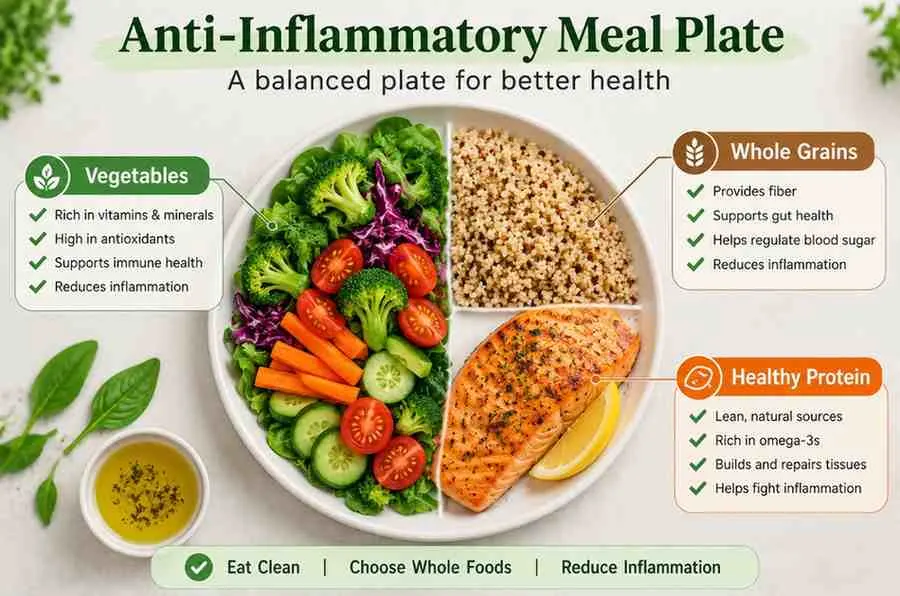
A useful mental shortcut when building a plate is to aim for roughly half vegetables or fruit, a quarter whole grains or legumes, and a quarter protein, finished with a healthy fat like olive oil, nuts, or seeds. It doesn’t need to be precise at every meal, it’s a rough guide for building the habit, not a rule to measure against.
Breakfast
- Oatmeal topped with walnuts, chia seeds, and mixed berries
- Greek yogurt with flaxseed, sliced almonds, and fresh fruit
Lunch
- Grilled salmon over a spinach and arugula salad with olive oil and lemon dressing
- Lentil soup with a side of leafy greens sautéed in garlic and olive oil
Dinner
- Baked mackerel with roasted broccoli and quinoa
- Stir-fried tofu or chicken with mixed vegetables, ginger, and garlic over brown rice
Snacks
- A small handful of mixed nuts
- Sliced apple with a spoon of almond butter
- A cup of green tea with a square of dark chocolate
Food vs. Supplements for Inflammation
Whole foods are generally considered a more reliable foundation for managing inflammation than supplements, because foods deliver nutrients alongside fiber and other compounds that work together, rather than in isolation.
Supplements such as fish oil, curcumin capsules, or antioxidant blends are sometimes marketed as anti-inflammatory shortcuts, but research on their standalone effectiveness is mixed, and quality varies significantly between brands. Some can also interact with medications or existing health conditions.
Part of the gap comes down to how nutrients behave differently in isolation versus in food. Curcumin from a supplement, for example, doesn’t come packaged with the fiber, other plant compounds, and food matrix effects it would have as part of a meal that includes turmeric, and absorption can vary widely depending on formulation. Whole foods also provide variety, dozens of different polyphenols and micronutrients across a normal diet, that no single supplement replicates.
This article does not recommend specific supplement dosages. If you’re considering a supplement for inflammation, talk to a doctor or registered dietitian first, particularly if you take other medications or have an underlying health condition.
How Long Until You See Results?
Most people following a consistent anti-inflammatory eating pattern report noticeable changes in energy or digestion within a few weeks, while measurable shifts in inflammatory markers like CRP typically take longer, often several weeks to a few months of sustained change.
This is a gradual process, not an overnight fix, because chronic inflammation usually builds up over years, and dietary changes need consistent repetition to shift the underlying pattern. Pairing dietary changes with adequate sleep, regular movement, and stress management tends to produce faster and more noticeable results than diet changes alone.
It also helps to set expectations around consistency rather than perfection. A pattern followed on most days, with occasional exceptions, tends to matter more than a handful of technically perfect anti-inflammatory meals surrounded by a diet that otherwise looks very different. Progress is usually noticed gradually, slightly less joint stiffness in the morning, steadier energy through the afternoon, rather than as a single dramatic shift.
Common Myths About Anti-Inflammatory Eating
A few misconceptions come up often enough that they’re worth addressing directly, since believing them can lead people to either avoid genuinely helpful foods or waste money chasing shortcuts that don’t hold up to scrutiny.
Myth: All Fat Is Bad for Inflammation
Not all dietary fat behaves the same way. Monounsaturated fats (olive oil) and omega-3 fatty acids (fatty fish, walnuts) are associated with lower inflammation, while trans fats and excessive saturated fat from processed sources are linked to higher inflammation. The type of fat matters more than the total amount.
Myth: Going Gluten-Free Reduces Inflammation for Everyone
For people with celiac disease or a diagnosed gluten sensitivity, removing gluten is medically necessary and does reduce inflammation triggered by that condition. For people without such a diagnosis, there’s no strong evidence that gluten itself drives inflammation, and cutting whole grains unnecessarily can mean missing out on fiber that supports gut health.
Myth: Supplements Can Replace Anti-Inflammatory Foods
Isolated compounds in supplement form don’t replicate the full nutrient package found in whole foods, including fiber and the interactions between compounds that occur naturally in food. Food-first is the consistent recommendation across nutrition research.
Myth: You Need a Detox or Cleanse to Reduce Inflammation
The body already has organs, primarily the liver and kidneys, dedicated to filtering and processing waste continuously. There’s no credible evidence that juice cleanses or detox teas provide additional anti-inflammatory benefit beyond what a balanced, whole-food diet already offers, and some of these products are high in sugar, which can work against the goal.
FAQs
What foods fight inflammation the fastest?
No food produces an immediate, measurable drop in inflammation. Foods rich in omega-3s (fatty fish), polyphenols (berries), and antioxidants (leafy greens) are the most consistently linked to lower inflammatory markers, but benefits build over weeks of regular intake rather than appearing after a single meal.
Is coffee anti-inflammatory or pro-inflammatory?
Moderate coffee consumption is associated with lower levels of certain inflammatory markers in several population studies, largely due to its polyphenol content. However, excessive intake can disrupt sleep, which itself is linked to increased inflammation, so moderation is key.
Can an anti-inflammatory diet help with joint pain?
Some people with joint pain report improvement after sustained dietary changes, particularly when reducing pro-inflammatory foods and increasing omega-3 intake. Results vary by individual and underlying cause, so an anti-inflammatory diet should be viewed as a supportive measure alongside medical guidance, not a replacement for it. Weight management can also play a role here, since carrying less excess weight reduces mechanical stress on weight-bearing joints like the knees and hips, independent of any effect on inflammation itself.
What is the difference between an allergy and inflammation?
An allergy is a specific immune response to a particular trigger, like a food protein or pollen, that produces symptoms such as hives, swelling, or difficulty breathing. Chronic inflammation is a broader, lower-grade immune response that isn’t tied to one specific trigger and often has no immediately obvious symptoms.
Are anti-inflammatory supplements worth taking?
Evidence on standalone supplement effectiveness is mixed, and quality varies between brands. Most nutrition experts recommend prioritizing whole foods first and consulting a healthcare provider before starting any supplement, especially if you take medications or have an existing health condition.
How is an anti-inflammatory diet different from the Mediterranean diet?
They overlap significantly. The Mediterranean diet is a specific, well-studied eating pattern that happens to align closely with anti-inflammatory eating principles, olive oil, fish, vegetables, whole grains, and limited processed food. “Anti-inflammatory diet” is a broader concept that the Mediterranean diet is often used to represent in research.
Does an anti-inflammatory diet help with weight management?
Many anti-inflammatory foods are also high in fiber and low in added sugar, which can support weight management indirectly by improving satiety and reducing calorie-dense processed food intake. Weight loss itself can further reduce inflammation, since excess body fat, particularly around the abdomen, is a known contributor to chronic low-grade inflammation.
Can chronic inflammation be reversed through diet alone?
Diet is one of several contributing factors, alongside sleep, physical activity, stress, and genetics. Sustained dietary changes can meaningfully lower inflammatory markers for many people, but diet alone may not fully resolve inflammation tied to an underlying medical condition, which is why persistent symptoms should be evaluated by a healthcare provider.
Key Takeaways
- Chronic inflammation is a low-grade, long-term immune response linked to heart disease, type 2 diabetes, arthritis, and other conditions.
- Anti-inflammatory foods, fatty fish, berries, leafy greens, nuts, olive oil, whole grains, and spices like turmeric and ginger, supply omega-3s, polyphenols, and antioxidants that support lower inflammation.
- Refined carbs, fried foods, sugary drinks, processed meat, and trans fats are the main dietary drivers of increased inflammation.
- The Mediterranean diet is the most well-studied real-world model of anti-inflammatory eating.
- Results build gradually over weeks to months of consistent eating patterns, not from any single meal or supplement.
- Persistent symptoms of possible chronic inflammation should be evaluated by a healthcare provider, not self-diagnosed.

I have 8+ years of experience in pharmaceutical research and health content writing.
I enjoy turning complex medical information into simple, clear, and easy-to-understand content that people can actually trust and use.
I’ve worked with healthcare brands to create content that is accurate, well-researched, and helpful for readers.
My main focus is on pharmaceutical writing, medical research, and SEO-friendly health content.
Currently, I’m working with Staminite, where I contribute to creating quality pharmaceutical content for a global audience.