
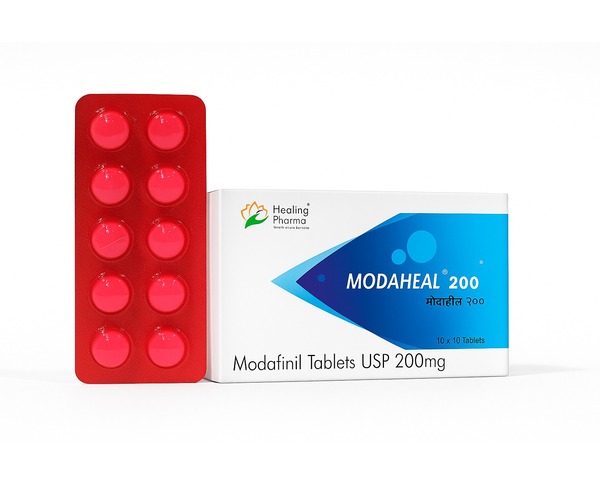
What is Modaheal 200 mg?
Modaheal 200 mg is a wakefulness-promoting tablet manufactured by Healing Pharma, a GMP-certified pharmaceutical company based in India. Each tablet contains 200 mg of modafinil as the active ingredient, the same compound found in the original branded product Provigil. As a generic formulation, it offers comparable therapeutic efficacy at a significantly lower cost, making it accessible to patients who require long-term treatment for sleep-related disorders.
In countries where it is legally available, patients who have been prescribed this medication and wish to buy Modaheal 200 mg should always do so through licensed pharmacies or verified online dispensaries that require a valid prescription. Schedule IV classification in the United States means it has recognized medical uses but also some potential for abuse – proper medical oversight matters.
Quick-reference product facts
| Property | Details |
| Active Ingredient | Modafinil 200 mg |
| Manufacturer | Healing Pharma (India) — GMP-certified |
| Dosage Form | Oral tablet |
| Pack Size | Typically 10 tablets per blister strip |
| Rx Status | Prescription-only (Schedule IV – United States; varies by country) |
| Drug Class | Eugeroic (wakefulness-promoting agent) |
| Equivalent Brand | Provigil (originator); other generics: Modalert, Modvigil |
| Storage Temperature | 15°C–30°C (59°F–86°F) |
How Modaheal 200 mg works
Unlike many older sleep-disorder medications, Modaheal promotes wakefulness through a comparatively targeted mechanism one that does not produce the broad neurochemical storm associated with conventional stimulants. While the full picture of its pharmacology is still being studied, researchers have identified two key pathways at work.
First, modafinil selectively inhibits the reuptake of dopamine in the brain by binding to the dopamine transporter (DAT). This causes dopamine to accumulate in synaptic gaps, which reinforces alertness signals. Crucially, this effect is more moderate and localized compared to amphetamines, which flood dopaminergic circuits far more aggressively.
Second, modafinil appears to activate orexin (hypocretin) neurons in the hypothalamus, a system that plays a central role in regulating the sleep-wake cycle. This interaction is especially relevant in narcolepsy, where orexin-producing neurons are often depleted or dysfunctional.
How it differs from stimulants like amphetamines
Many patients worry that wakefulness agents are essentially “stronger” or “safer” versions of street stimulants. This concern deserves a direct answer. Amphetamines trigger a massive, non-selective release of dopamine, norepinephrine, and serotonin simultaneously producing strong euphoria, cardiovascular strain, and high addiction potential. Modafinil’s mechanism is pharmacologically distinct: it does not cause a broad catecholamine flood. Animal studies suggest it has significantly lower reinforcing properties and abuse potential, which is part of why it carries a Schedule IV (rather than Schedule II) classification.
That said, “lower risk” does not mean “no risk.” Modafinil can still be misused, and its use outside of medical supervision is inadvisable.
Onset and duration of effect
When taken orally, modafinil is absorbed relatively quickly through the gastrointestinal tract. Most users notice the onset of wakefulness-promoting effects within 30–60 minutes of ingestion, with peak plasma concentrations typically reached around 2–4 hours post-dose. The duration of meaningful effect generally spans 8–12 hours, though this varies based on individual metabolism, body weight, liver function, and whether the tablet was taken with food (food may slightly delay onset but does not significantly affect overall absorption).
The half-life of modafinil is approximately 12–15 hours, meaning its effects taper gradually rather than stopping abruptly an important consideration when planning dose timing to avoid interference with nighttime sleep.
Medical conditions Modaheal 200 mg is prescribed for
Modaheal 200mg has three FDA-approved indications in the United States, all of which involve excessive daytime sleepiness (EDS) that cannot be adequately managed through behavioral interventions alone.
Narcolepsy (excessive daytime sleepiness)
Narcolepsy is a chronic neurological disorder characterized by uncontrollable episodes of daytime sleep, often accompanied by cataplexy, sleep paralysis, and hypnagogic hallucinations. In patients with narcolepsy, orexin-producing cells in the hypothalamus are typically damaged or destroyed which is why modafinil’s interaction with the orexin system is particularly relevant here. Clinical trials have demonstrated meaningful reductions in daytime sleepiness scores (Epworth Sleepiness Scale) in narcoleptic patients using modafinil compared to placebo.
Obstructive sleep apnea (adjunct therapy)
Obstructive sleep apnea (OSA) disrupts normal sleep architecture through repeated breathing interruptions during the night, leaving patients chronically fatigued even after a full night in bed. Modafinil is prescribed as an adjunct therapy in OSA — meaning it addresses residual daytime sleepiness in patients whose breathing disorder is already being managed (typically via CPAP therapy). It is not a substitute for treating the underlying airway obstruction.
Shift work sleep disorder (SWSD)
Shift work sleep disorder affects people whose occupational schedules regularly conflict with normal circadian rhythms night-shift nurses, emergency responders, factory workers, and others. Sustained sleepiness and cognitive impairment during work hours are its hallmarks. Modafinil, taken approximately one hour before the start of a night shift, has been shown in controlled studies to improve alertness and reduce error rates in shift workers with diagnosed SWSD.
Off-label uses: what the research currently shows
Off-Label Use Notice
The following conditions are not FDA-approved indications for modafinil. Off-label prescribing is legal and sometimes clinically appropriate, but it should always happen through proper medical evaluation. Never self-prescribe for these conditions.
- ADHD fatigue: Some prescribers use modafinil in adult ADHD when stimulant medications are contraindicated or poorly tolerated. Evidence is limited and mixed; it is not considered first-line treatment.
- Depression-related fatigue: A subset of patients with treatment-resistant depression experience disabling fatigue. Small studies and case reports suggest modafinil may provide adjunctive benefit when combined with antidepressants, though robust evidence is lacking.
- Multiple sclerosis (MS) fatigue: Fatigue is among the most debilitating symptoms of MS. Controlled trials have produced inconsistent results, but some neurologists prescribe modafinil for MS-related fatigue in carefully selected patients.
- Cognitive enhancement in healthy individuals: This is perhaps the most discussed off-label use. While some studies show modest improvements in certain cognitive tasks (particularly complex decision-making), the long-term safety of sustained use in healthy individuals is unknown. This is not a medically endorsed application.
Recommended dosage guidelines
The information below reflects standard prescribing guidance. Your doctor may recommend a different dose based on your clinical picture. Do not adjust your dose without consulting your prescriber.
Standard adult dose by condition
| Condition | Standard Dose | Recommended Timing |
| Narcolepsy | 200 mg once daily | Morning, upon waking |
| Obstructive Sleep Apnea (adjunct) | 200 mg once daily | Morning, with or without CPAP |
| Shift Work Sleep Disorder | 200 mg once daily | ~1 hour before shift begins |
| Maximum daily dose | 400 mg (in divided doses) | Only under medical supervision |
How to take Modaheal 200 mg (with or without food, water intake)
These tablets can be taken with or without food. Food may slightly delay the onset of effect by 30–60 minutes but does not meaningfully change total drug absorption. Swallow the tablet whole with a full glass of water. Adequate hydration throughout the day is recommended, as modafinil may contribute to headaches when fluid intake is insufficient. Avoid taking it with grapefruit juice, which can interfere with liver enzymes responsible for drug metabolism.
What to do if you miss a dose
If you miss a scheduled dose and it is still early in the day, take it as soon as you remember. If it is already afternoon or evening, skip the missed dose entirely — taking modafinil late in the day is likely to disrupt nighttime sleep. Never double up doses to compensate for a missed one.
Dosage adjustments: elderly patients and hepatic impairment
Older adults (generally 65+) tend to clear modafinil more slowly due to reduced hepatic metabolism and altered protein binding. Prescribers typically begin with a lower dose (often 100 mg) and assess tolerability before considering an increase.
Patients with severe hepatic (liver) impairment should have their dose halved, as the liver is the primary site of modafinil metabolism. Those with mild to moderate liver disease should be monitored closely. No specific dose adjustment is mandated for renal impairment, but caution applies.
Overdose: Signs and What to Do Immediately
There is no specific antidote for modafinil overdose. Signs of overdose may include severe insomnia, agitation, confusion, elevated heart rate, hypertension, nausea, diarrhea, and in rare cases, hallucinations or chest pain. If you suspect an overdose in yourself or someone else, call your local emergency services or poison control immediately. Do not attempt to manage this at home..
Common and serious side effects of Modaheal 200 mg
Like all medications, modafinil carries a spectrum of potential adverse effects, ranging from mild and manageable to rare but serious. Understanding these helps patients make informed decisions and recognize warning signs early.
Common side effects (reported in ≥1% of users)
These effects are generally mild and often resolve as the body adjusts to the medication:
Frequently reported
- Headache (most common, up to 34% in trials)
- Nausea (~11%)
- Nervousness / anxiety
- Insomnia (especially with late dosing)
- Dizziness
- Dry mouth
- Reduced appetite
Less common but noted
- Diarrhea or gastrointestinal upset
- Back pain
- Rhinitis
- Palpitations (mild)
- Dyspepsia
- Sweating
Serious side effects requiring immediate medical attention
Severe skin reactions
Stevens-Johnson Syndrome (SJS) and Toxic Epidermal Necrolysis (TEN) are rare but life-threatening skin disorders that can occur within the first few weeks of treatment. Symptoms include a spreading rash, blistering, skin peeling, and sores in the mouth, eyes, or genitals. Seek emergency care immediately if these develop.
Psychiatric reactions
Hallucinations, mania, delusions, suicidal ideation, and aggression have been reported, particularly in patients with underlying psychiatric conditions. Modafinil is not recommended in patients with a history of psychosis or bipolar disorder unless carefully supervised.
Serious allergic reactions
Anaphylaxis and angioedema (severe facial or airway swelling) have occurred. Signs include difficulty breathing, throat tightening, and widespread hives. This is a medical emergency requiring immediate care.
Multi-organ hypersensitivity
A drug reaction with eosinophilia and systemic symptoms (DRESS) has been reported with modafinil. This presents with fever, rash, and involvement of internal organs. Discontinue the medication and seek urgent evaluation if suspected.
Cardiovascular considerations
Modafinil can modestly increase heart rate and blood pressure, particularly at higher doses. In clinical trials, mean heart rate increases of approximately 3–4 beats per minute and small blood pressure elevations were documented. While this is unlikely to be significant in healthy adults, patients with pre-existing hypertension, arrhythmia, coronary artery disease, or a history of mitral valve prolapse should be carefully evaluated before use. Regular blood pressure monitoring is advisable for patients in these categories.
How to manage common side effects (practical tips)
- Headache: Take with a full glass of water; maintain good hydration throughout the day. If headaches are persistent, discuss dose timing or dose reduction with your prescriber.
- Insomnia: Always take the dose in the morning (or pre-shift for SWSD). Avoid caffeine stacking — combining modafinil with multiple cups of coffee amplifies stimulant effects and worsens sleep disruption.
- Nausea: Taking the tablet with a light meal or snack can reduce stomach upset without significantly impacting effectiveness.
- Anxiety: If nervousness is notable, discuss whether 100 mg is a more appropriate starting dose. Do not self-adjust without medical guidance.
Who should not take Modaheal 200 mg
Contraindications
Modafinil should not be used by individuals with:
- Known hypersensitivity or allergic reaction to modafinil, armodafinil, or any excipient in the tablet formulation
- A history of left ventricular hypertrophy or mitral valve prolapse associated with prior stimulant use
- Active serious psychiatric conditions (e.g., acute psychosis, untreated bipolar disorder) unless under specialist supervision
Use during pregnancy and breastfeeding
Modafinil is classified as FDA Pregnancy Category C. This means that adequate, well-controlled human studies are lacking, and animal studies have shown some evidence of fetal harm at higher doses. The potential risks during human pregnancy are not fully characterized. Most prescribers advise against its use during pregnancy unless the benefit clearly outweighs the risk of a conversation that should happen explicitly between the patient and their obstetrician.
It is not known whether modafinil passes into human breast milk in clinically meaningful quantities. Given the uncertainty, most clinical guidelines suggest avoiding its use during breastfeeding or transitioning to formula feeding if treatment is necessary.
Drug interactions to be aware of
Modafinil is metabolized primarily by the liver and affects the CYP enzyme system in ways that can alter the blood levels of numerous other medications:
- Hormonal contraceptives (critical): Modafinil induces CYP3A4 enzymes, which accelerates the breakdown of estrogen and progestin in hormonal birth control (pills, patches, vaginal rings, implants). This can significantly reduce contraceptive effectiveness and increase the risk of unintended pregnancy. Patients should use a non-hormonal contraceptive method during treatment and for at least one month after stopping modafinil.
- Cyclosporine: Blood levels of cyclosporine (an immunosuppressant used in organ transplant patients) can drop significantly, potentially leading to rejection. Close monitoring is required.
- Warfarin: Modafinil can increase warfarin activity, raising bleeding risk. INR monitoring is recommended when starting or stopping modafinil in patients on anticoagulation therapy.
- CYP2C19 substrates: Drugs metabolized by CYP2C19 — such as omeprazole, diazepam, and some antidepressants — may have altered blood levels. Review your full medication list with a pharmacist or prescriber.
- MAO inhibitors: Concurrent use is not recommended; the interaction has not been adequately studied and poses theoretical risk.
Alcohol and Modaheal: what you need to know
The interaction between modafinil and alcohol is not as well-studied as with some other medications, but important cautions apply. Modafinil may mask the perceived sedating effects of alcohol, which can lead a person to drink more than intended without recognizing their level of impairment. This creates real safety risks, particularly for driving or operating equipment. Alcohol also disrupts sleep architecture, directly counteracting what the medication is prescribed to address. Most sleep medicine specialists advise against alcohol consumption during modafinil therapy.
Dependence and withdrawal potential
Modafinil’s Schedule IV classification reflects a recognized though comparatively low potential for psychological dependence. Unlike Schedule II stimulants (amphetamines), physical dependence with severe withdrawal syndromes is not a documented clinical concern with modafinil at therapeutic doses. However, some users report increased fatigue, irritability, or reduced motivation upon abrupt discontinuation after prolonged use. These are generally transient. If you have a history of substance use disorder, discuss this explicitly with your prescriber before starting treatment.
Driving and operating machinery while taking Modaheal
Modafinil is prescribed precisely because it improves alertness — which might suggest no driving concerns. However, the underlying condition being treated (narcolepsy, OSA, or SWSD) may still cause sudden sleepiness, and until a patient has established how modafinil affects them personally, caution is warranted. Dizziness and vision changes have also been reported in a minority of users. Discuss your specific situation with your physician; many countries have specific regulations around driving with sleep disorders regardless of medication status.
How to store Modaheal 200 mg tablets correctly
Proper storage is often overlooked but meaningfully impacts drug stability and safety. Store Modaheal tablets at room temperature, ideally between 15°C and 30°C (59°F–86°F). Avoid areas that experience high humidity or temperature fluctuations, such as bathrooms, kitchen counters near stoves, or window sills. A bedroom drawer or dedicated medicine cabinet in a climate-controlled room is ideal.
- Keep the tablets in the original blister packaging until use
- Store away from direct sunlight and moisture
- Keep out of reach of children and pets at all times
- Do not store in the refrigerator or freezer
Shelf life and checking expiry dates
Modaheal tablets typically carry a shelf life of 24–36 months from the manufacturing date. Always check the expiry date printed on the blister strip and outer packaging before taking a tablet. If the tablets have changed color, developed an unusual odor, or show signs of crumbling, do not use them regardless of the printed date.
Disposal of unused or expired tablets
Do not flush tablets down the toilet or throw them in regular household waste where they could contaminate water supplies or be accessed by children or individuals for whom they were not prescribed. In the United States, the FDA’s MedWatch Take-Back program and DEA-authorized collection sites offer safe disposal. Many pharmacies also run take-back programs. If none are accessible, the FDA recommends mixing tablets with an undesirable substance (coffee grounds, cat litter) in a sealed bag before placing in general waste but community disposal programs remain the preferred option.
Modafinil legal status and prescription requirements
Modafinil occupies different legal categories in different countries, and patients must understand the regulations applicable to their location:
- United States: Schedule IV controlled substance under the DEA. Requires a valid prescription from a licensed US physician. International importation without proper authorization is illegal.
- United Kingdom: Class C controlled drug. Prescription-only medicine (POM). Possession without prescription is a criminal offense.
- Australia: Schedule 4 (Prescription Only Medicine). Legal with prescription.
- India: Available on prescription; manufacturing hubs for generic versions including Healing Pharma products.
- Canada, EU countries: Generally prescription-only, with varying scheduling and import regulations.
How to obtain a legitimate prescription
The appropriate path begins with a clinical evaluation by your primary care physician, a sleep medicine specialist, or a neurologist. If your symptoms suggest a sleep disorder, a formal sleep study (polysomnography) may be recommended to establish a diagnosis before prescribing wakefulness agents. Telehealth platforms that connect patients with licensed sleep medicine physicians have made this process more accessible, though the same standard of evaluation still applies; a legitimate prescriber will not prescribe modafinil without proper clinical grounds.
Frequently asked questions
Q: Is Modaheal 200mg the same as Provigil?
Yes, both contain the same active ingredient — modafinil 200mg. Provigil is the original branded version developed by Cephalon, while Modaheal is a generic manufactured by Healing Pharma in India. Both deliver the same therapeutic effect; the key difference is cost. Generic versions like Modaheal are significantly more affordable while meeting the same GMP manufacturing standards.
Q: How long does Modaheal 200mg stay in your system?
Modaheal has a half-life of approximately 12–15 hours, meaning the drug reduces to half its concentration in your blood within that window. Full clearance from your system generally takes around 2–4 days. For urine drug testing, modafinil can typically be detected for up to 2–4 days after the last dose, though this varies based on metabolism, hydration, and kidney function.
Q: Can I take Modaheal 200mg every day?
For FDA-approved conditions like narcolepsy and obstructive sleep apnea, daily use is standard and medically appropriate under physician supervision. However, daily off-label use — such as for cognitive enhancement in healthy individuals — is not medically endorsed, and long-term safety in that context is not well established. Some users also report mild tolerance over time, which is another reason consistent medical oversight matters.
Q: Does Modaheal affect birth control effectiveness?
Yes — this is an important drug interaction. Modafinil induces CYP3A4 liver enzymes, which speeds up the breakdown of estrogen and progestin found in hormonal contraceptives including pills, patches, vaginal rings, and implants. This can significantly reduce their effectiveness and increase the risk of unintended pregnancy. Patients taking Modaheal should use a non-hormonal contraceptive method during treatment and for at least one month after stopping the medication.
Q: What time of day should I take Modaheal 200mg?
Timing depends on your condition. For narcolepsy and obstructive sleep apnea, take it once in the morning upon waking. For shift work sleep disorder, take it approximately one hour before your shift begins. Avoid taking it in the afternoon or evening regardless of the condition, as modafinil’s 12–15 hour half-life makes late dosing very likely to interfere with your nighttime sleep.
Q: Can Modaheal cause anxiety or depression?
Anxiety and nervousness are among the known side effects, reported in a notable percentage of users. These are more likely at higher doses or when combined with caffeine. Depression as a direct side effect is less commonly reported, but mood changes including irritability have been noted — particularly upon abrupt discontinuation after prolonged use. If you experience worsening anxiety, low mood, or any psychiatric symptoms after starting Modaheal, contact your prescriber promptly rather than adjusting the dose yourself.
Q: Is Modaheal 200mg addictive?
Modaheal carries a comparatively low risk of dependence compared to classical stimulants. Its Schedule IV classification — rather than Schedule II like amphetamines — reflects this distinction. Physical dependence with severe withdrawal is not a documented clinical concern at therapeutic doses. However, some users do report increased fatigue and reduced motivation after stopping prolonged use. These effects are generally temporary. If you have a personal or family history of substance use disorder, discuss this with your prescriber before starting treatment.
References
- StatPearls – Modafinil (NCBI Bookshelf / PubMed)
- WebMD – Modafinil Drug Overview
- DEA – Drug Scheduling Reference
ⓘ Medical Disclaimer
The content on this page is provided for general informational purposes only and is not a substitute for professional medical advice, diagnosis, or treatment. Modaheal 200 mg is a prescription-only controlled substance. Always consult a qualified healthcare provider before taking any medication. Never disregard professional medical advice or delay seeking it based on information you have read here. Individual responses to medication vary — only a physician familiar with your complete medical history can determine whether this or any medication is appropriate for you.

Reviews
There are no reviews yet.