
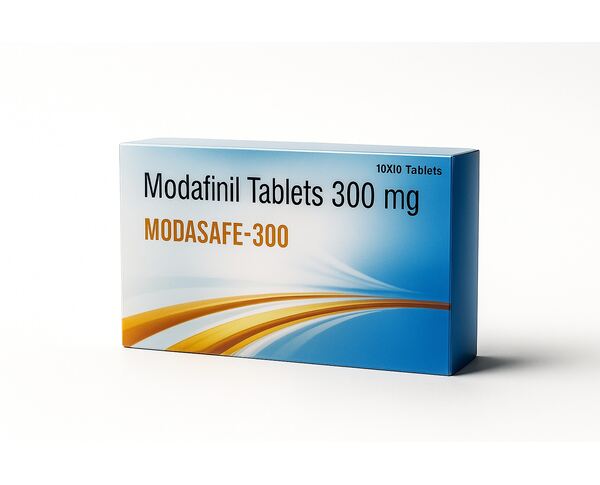
Modasafe 300 mg is a high-dose, wakefulness-promoting tablet containing 300 mg of modafinil per dose. Designed specifically for individuals who have already established a tolerance to lower-dose modafinil formulations, it supports sustained alertness, cognitive clarity, and daytime functioning across conditions including narcolepsy and shift work sleep disorder. If you’re considering whether to buy Modasafe 300 mg, the detailed guide below will help you understand exactly what to expect including how it works, who it’s suited for, and important safety Full Product Guide.
What Is Modasafe 300 mg Tablet?
Modasafe 300 mg is an oral tablet containing 300 milligrams of modafinil as its active ingredient making it one of the higher-strength formulations of this wakefulness-promoting medicine available. It is manufactured by Safe Pharmaceuticals, a pharmaceutical company focused on producing generic CNS agents to established quality and consistency standards. Each tablet falls under the eugeroic drug class, a category of agents that promote wakefulness without the broad stimulant effects associated with amphetamines.
How the 300 mg Dose Differs From Standard Options
Most clinical guidelines and product monographs for modafinil recommend a standard daily dose of 200 mg for conditions like narcolepsy and obstructive sleep apnoea. A 100 mg dose is often recommended as an introductory amount for new users. The 300 mg tablet sits above both delivering a 50% higher dose than the conventional 200 mg formulation.
This difference matters for several reasons. Higher plasma concentrations at 300 mg produce a more pronounced and potentially longer-lasting alert state. However, dose-dependent side effects particularly headache and anxiety become more likely at this level. That’s why the 300 mg strength is not intended as a starting point; it is positioned for individuals who have already used and tolerated lower doses effectively.
Who Is This Dose Designed For?
Modasafe 300 mg is targeted specifically at experienced modafinil users those who have previously responded well to 200 mg formulations but feel that standard dosing no longer provides the sustained alertness they need. It is not appropriate for modafinil-naive individuals, and medical supervision is strongly recommended before transitioning to this higher dose.
How Does Modasafe 300 mg Work? (Mechanism of Action)
A science-grounded look at what modafinil actually does in the brain and why 300 mg produces a distinct effect.
The Neuroscience Behind Modafinil
Modafinil’s primary mechanism involves inhibition of the dopamine reuptake transporter (DAT), which increases available dopamine in synaptic spaces. However, unlike traditional stimulants such as amphetamines, modafinil does so at a relatively slower rate and without triggering the rapid, intense dopamine surges associated with addiction-forming substances. This is why its euphoria potential and dependence risk are considered substantially lower.
Beyond dopamine, modafinil also influences the brain’s norepinephrine, histamine, and orexin (hypocretin) systems all of which play roles in maintaining wakefulness. The orexin system in particular is directly implicated in narcolepsy, which is why modafinil is a first-line treatment for this condition. Increased orexin signalling supports stable, sustained alertness rather than the intermittent jolt-and-drop pattern of adenosine-blocking agents like caffeine.
Why 300 mg Produces a Different Effect Than 200 mg
Pharmacokinetically, modafinil is characterised by a half-life of approximately 12–15 hours, with peak plasma concentration reached within 2–4 hours of ingestion. At 300 mg, the peak plasma level is proportionally higher than at 200 mg meaning stronger receptor engagement and a sustained alertness plateau that may extend beyond what users typically experience at lower doses.
Importantly, this increased plasma load also means that dose-dependent adverse effects especially headache and anxiety carry a statistically higher incidence. The FDA labelling for modafinil notes that these side effects are concentration-dependent, which is why clinical protocols generally discourage exceeding 200 mg in standard practice unless clinically justified.
Onset typically begins 30–60 minutes post-ingestion, with full effect usually felt within 1–2 hours. Food may slightly delay the absorption curve without meaningfully reducing bioavailability.
Modafinil vs. Traditional Stimulants
| Feature | Modafinil | Caffeine | Amphetamine |
| Primary Mechanism | DAT inhibition + orexin activation | Adenosine receptor blockade | Dopamine/norepinephrine release + reuptake block |
| Addiction / Dependence Risk | Low (Schedule IV / Schedule 4) | Very low | High (Schedule II) |
| Crash / Rebound Effect | Minimal to none | Moderate (fatigue rebound) | Significant |
| Euphoria Potential | Low | Negligible | High |
| Duration of Effect | 10–15 hours | 4–6 hours | 8–12 hours |
| Prescription Required (AU)? | Yes (Schedule 4) | No | Yes (Schedule 8) |
What Is Modasafe 300 mg Used For?
Clinically Approved Indications
Modafinil holds regulatory approval for three primary sleep-related conditions. Each involves excessive wakefulness impairment, but they differ meaningfully in cause and management context:
Narcolepsy — A chronic neurological disorder characterised by unpredictable episodes of excessive daytime sleepiness, often accompanied by sudden muscle weakness (cataplexy), sleep paralysis, and disrupted nocturnal sleep. The orexin deficiency at the root of narcolepsy makes modafinil particularly well-matched as a treatment, as it directly supports the wakefulness pathways that are underactive in these patients. The wakefulness-promoting medicine is typically taken once in the morning, or in some cases as a split dose (morning and midday).
Obstructive Sleep Apnoea / Hypopnoea Syndrome (OSAHS) — In patients with obstructive sleep apnoea whose primary airway obstruction is managed via CPAP therapy, residual daytime sleepiness can persist despite effective overnight treatment. In these cases, modafinil serves as an adjunct — not a replacement for CPAP — to address the daytime fatigue component. Patients should not discontinue CPAP therapy while using this narcolepsy treatment adjunct.
Shift Work Sleep Disorder (SWSD) — A circadian rhythm condition affecting people whose work schedules fall during conventional sleep hours (night shifts, rotating shifts, early morning shifts). Taking the tablet approximately one hour before a shift begins allows workers to maintain alertness during their working hours while minimising the carryover effect into off-shift rest periods.
Off-Label & Cognitive Enhancement Uses
Important Note on Off-Label Use
The following uses are not formally approved by the TGA or FDA. They should only be considered with input from a licensed healthcare provider, particularly at higher doses such as 300 mg.
Beyond clinical indications, modafinil has accumulated a significant body of research attention as a cognitive performance agent. Common off-label applications include:
Cognitive enhancement in high-demand professions — Professionals in medicine, law, finance, and technology have reported using modafinil tablets to sustain focus during prolonged, mentally demanding tasks. Research has shown improvements in certain executive function domains, particularly sustained attention and working memory, in non-sleep-deprived individuals.
Academic use — Students facing high-stakes examinations or extended study sessions have used lower doses of modafinil to extend productive wakefulness and reduce cognitive fatigue. However, the 300 mg dose is considered excessive for this purpose; most research in this area involves 100–200 mg.
Military and aviation fatigue management — Modafinil has been studied and in some cases formally adopted by military branches (including the US Air Force) as an approved fatigue countermeasure during extended operations. This usage informed a Cochrane review finding that it reduces attention lapses in shift-working contexts.
Modasafe 300 mg Dosage Guide
Comprehensive dosage information — by condition, by patient profile, and by situation.
Standard Dosage by Condition
| Condition | Recommended Dose | Timing |
| Narcolepsy | 200–400 mg/day | Morning, or split: morning + midday |
| Obstructive Sleep Apnoea | 200 mg/day | Morning |
| Shift Work Sleep Disorder | 200 mg | ~1 hour before shift start |
| Off-label / Cognitive Use | 100–200 mg (start low) | Morning only |
Note: The 400 mg/day upper clinical range for narcolepsy may encompass combined doses across the day — not necessarily a single 400 mg tablet.
Is 300 mg the Right Dose for You?
Not a Starting Dose
The 300 mg strength is above standard clinical recommendations. It should only be considered by individuals who have already used and tolerated 200 mg modafinil formulations without significant adverse effects. If you are new to modafinil, start at 100 mg and work upward under medical guidance.
The 300 mg dose is most appropriate for experienced, tolerant users who have found that standard doses no longer provide adequate daytime coverage. Some patients with narcolepsy — a condition characterised by significant orexin depletion — may require higher doses to achieve sufficient therapeutic benefit. This should always be determined by a treating physician.
Special considerations apply for the following groups:
Elderly patients: Hepatic metabolism slows with age, meaning plasma levels may remain elevated for longer. Dose reduction or careful monitoring is advisable.
Severe hepatic (liver) impairment: The FDA label recommends reducing the modafinil dose by approximately 50% in patients with severe liver disease, as hepatic clearance is significantly reduced.
Renal impairment: Available data does not indicate a need for dose adjustment in mild to moderate renal impairment, but close monitoring is advised.
What If You Miss a Dose?
If you remember your missed dose in the morning or early afternoon, take it as soon as possible. If it is already mid-afternoon or later, skip the missed dose entirely. Do not take a double dose to compensate. Taking modafinil late in the day significantly increases the risk of sleep onset difficulty that night, which counterproductively worsens the fatigue you are managing.
How to Take Modasafe 300 mg
- Swallow the tablet whole with a full glass of water. Unlike some score-lined 200 mg tablets, the 300 mg formulation is designed to be taken intact — do not crush, split, or chew.
- Take with or without food. Food may slow the rate of absorption slightly, delaying onset by 30–45 minutes, but does not meaningfully reduce overall bioavailability. Taking it with a light meal can help reduce nausea in sensitive individuals.
- Time it strategically. For narcolepsy and sleep apnoea: take first thing in the morning. For shift work disorder: take approximately one hour before your shift begins.
- Hydrate throughout the day. Modafinil can suppress the sensation of thirst and may contribute to dehydration-related headaches. Aim for at least 2 litres of water during waking hours on dosing days.
- Avoid taking after midday if possible. Given the 12–15 hour half-life, afternoon dosing frequently results in difficulty falling asleep at night, which can create a counterproductive fatigue cycle.
- Do not combine with alcohol. Alcohol interacts unpredictably with CNS-active agents. The combination may mask feelings of intoxication while impairing coordination and judgment.
- If managing sleep apnoea: continue CPAP. Modafinil does not treat the underlying airway obstruction. Continue your CPAP regimen as prescribed — this wakefulness agent addresses residual daytime sleepiness only.
Benefits of Modasafe 300 mg — What to Expect
Realistic, mechanism-grounded benefits — not exaggerated marketing claims.
Cognitive & Performance Benefits
Extended Wakefulness
10–15 hours of sustained alertness with a smoother, more gradual onset compared to traditional stimulants.
Working Memory Support
Research indicates improved performance on working memory and executive function tasks, particularly under sleep pressure.
Sustained Focus
Enhanced ability to maintain attention during repetitive or cognitively demanding tasks over extended periods.
No Crash Effect
Unlike caffeine or amphetamines, modafinil’s mechanism does not produce a pronounced energy crash as levels decline.
Low Abuse Potential
Classified as Schedule IV (US) / Schedule 4 (AU) — significantly lower addiction and misuse risk than traditional CNS stimulants.
Reduced Reaction Time
Studies in sleep-deprived subjects demonstrate measurable improvements in reaction time and reduced rates of attention lapses.
Clinical Benefits by Condition
In narcolepsy trials, modafinil has demonstrated significant reductions in Epworth Sleepiness Scale (ESS) scores, a standardised measure of daytime sleepiness severity. Patients typically report improved ability to maintain wakefulness during activities such as driving, conversations, and sustained tasks.
For shift workers, evidence from a Cochrane systematic review found that modafinil meaningfully reduced the number of attention lapses and near-accidents during night shifts compared to placebo, supporting its role in occupational safety management alongside other fatigue countermeasures.
Modasafe 300 mg Side Effects
Being informed about side effects is part of using any medication responsibly. Here is a clear, balanced account based on clinical trial data.
Common Side Effects (≥5% Incidence in Clinical Trials)
These effects were observed in clinical trials and are reported more frequently at 300 mg than at the standard 200 mg dose:
- Headache
- Nausea
- Nervousness / Anxiety
- Rhinitis
- Diarrhoea
- Back pain
- Insomnia
- Dizziness
- Dyspepsia
Headache and anxiety are dose-dependent effects — statistically more common at 300 mg than at lower doses.
Less Common Side Effects
- Dry mouth
- Palpitations
- Elevated blood pressure
- Appetite suppression
- Mood changes
Serious / Rare Side Effects – Stop Use and Seek Immediate Help
Stop taking this medication immediately and seek emergency medical care if you experience any of the following:
- Stevens–Johnson Syndrome (SJS)
- Toxic Epidermal Necrolysis (TEN)
- DRESS Syndrome
- Chest pain / Arrhythmia
- Psychosis or hallucinations
- Severe allergic reaction
Any new skin rash should prompt immediate discontinuation. Stevens-Johnson Syndrome and Toxic Epidermal Necrolysis are rare but life-threatening dermatological conditions that have been reported with modafinil. Once a rash is attributed to modafinil, the drug should never be restarted. DRESS syndrome is a rare multi-organ hypersensitivity reaction involving fever, lymphadenopathy, and systemic involvement — a medical emergency.
Managing Common Side Effects
| Side Effect | Management Strategy |
| Headache | Increase water intake throughout the day; take with a light meal; consider whether a lower dose would be equally effective |
| Insomnia | Always take in the morning; avoid doses after 12:00 PM; use the lowest effective dose |
| Anxiety / Nervousness | Reduce dose; consider whether 300 mg is appropriate — anxiety-prone individuals may do better at 200 mg or lower |
| Nausea | Take with food; ensure adequate hydration |
Safety Warnings – Read Before Use
Cardiovascular Warnings
Modafinil should be used with caution in patients with pre-existing cardiovascular conditions. Specifically, individuals with a history of left ventricular hypertrophy (LVH) or mitral valve prolapse who have previously experienced adverse reactions to CNS stimulants should not use this product without explicit medical clearance. Modafinil has been shown to cause modest increases in heart rate and blood pressure in some users. Report any chest pain, palpitations, shortness of breath, or rapid heartbeat to a healthcare provider immediately.
Psychiatric Warnings
This wakefulness-promoting medicine has the potential to exacerbate pre-existing psychiatric conditions, including depression, mania, psychosis, and bipolar disorder. New or worsening psychiatric symptoms — including hallucinations, agitation, paranoia, or suicidal ideation — should prompt immediate discontinuation and a review with a mental health professional. Use extreme caution in anyone with a documented psychiatric history.
Skin Reaction Warning
Any new skin rash is a red flag. Stop immediately.
Do not attempt to determine whether a rash is “mild” or “modafinil-related” before seeking advice. SJS and TEN can begin as a seemingly minor rash. If you have previously experienced a skin reaction to modafinil or armodafinil, do not restart treatment under any circumstances.
Hormonal Contraception Warning
Modafinil is a CYP3A4 enzyme inducer, which means it can accelerate the metabolism of drugs processed through this hepatic pathway — including most hormonal contraceptives. The clinical result is reduced plasma levels of the contraceptive hormone, which can meaningfully compromise contraceptive protection. Women of childbearing age using hormonal contraceptives (pills, patches, implants, hormonal IUDs) should use a reliable barrier method of contraception during treatment and for at least two months after the final dose.
Who Should Avoid Modasafe 300 mg
Understanding whether this product is appropriate for you before purchase or use.
Absolute Contraindications — Do Not Use If:
- You are allergic or hypersensitive to modafinil, armodafinil, or any excipient in the tablet formulation
- You have a history of Stevens-Johnson Syndrome, Toxic Epidermal Necrolysis, or DRESS while taking modafinil or armodafinil
- You are under 18 years of age (safety and efficacy not established in paediatric populations)
- You are pregnant — modafinil is associated with an increased risk of congenital malformations based on human data (FDA Pregnancy Category C / TGA Category D)
- You are breastfeeding (modafinil and its metabolites may pass into breast milk; insufficient safety data available)
Use With Caution — Consult Your Doctor First If:
- You have severe hepatic (liver) impairment — dose reduction required
- You have a history of cardiac conditions including mitral valve prolapse, LVH, recent myocardial infarction, or arrhythmia
- You have a personal or family history of psychiatric disorders including depression, bipolar disorder, psychosis, or mania
- You are elderly (reduced hepatic clearance; start at lowest appropriate dose)
- You have a history of drug or alcohol dependence
- You have renal impairment (monitor for drug accumulation)
- You are modafinil-naive — this 300 mg tablet is not an appropriate starting dose; begin with 100–200 mg under medical guidance
Drug Interactions
One of the most important sections for safe use. Disclose all medications — including supplements — to your doctor or pharmacist before starting.
Modafinil as a CYP Enzyme Modulator
Modafinil is a moderate inducer of CYP3A4 and a moderate inhibitor of CYP2C19. This dual activity means it can simultaneously lower blood levels of CYP3A4-metabolised drugs (by speeding their breakdown) and raise blood levels of CYP2C19-metabolised drugs (by slowing their breakdown). The practical consequence is that co-administered medications may become less or more effective — a clinically significant risk in polypharmacy scenarios.
| Drug / Drug Class | Interaction Type | Clinical Note |
| Hormonal contraceptives | Reduced efficacy (CYP3A4 induction) | Use barrier contraception during treatment and for 2 months after stopping |
| Cyclosporine | Blood levels reduced by ~50% | Monitor closely; dose adjustment likely needed |
| Midazolam | Systemic exposure reduced by ~32% | Sedation may be inadequate; dosage adjustment may be needed |
| Quetiapine | Plasma exposure reduced by ~29% | Psychiatric medication management; discuss with psychiatrist |
| Warfarin / anticoagulants | INR may be altered | Monitor INR closely to avoid under-anticoagulation |
| Omeprazole, diazepam (CYP2C19 substrates) | Drug accumulation risk (CYP2C19 inhibition) | Monitor for enhanced or prolonged drug effects |
| MAO Inhibitors (MAOIs) | Potential interaction — mechanism unclear | Avoid concurrent use; consult prescribing physician |
| Caffeine | Combined CNS stimulation | Risk of increased anxiety, palpitations, and elevated blood pressure |
| Alcohol | Unpredictable CNS effects | Avoid during modafinil use — may mask intoxication |
Always provide a complete list of all medications, vitamins, herbal supplements, and over-the-counter products to your prescribing doctor and dispensing pharmacist before starting modafinil. Many interactions are clinically manageable with dose adjustments — but only if your healthcare team is aware.
How to Store Modasafe 300 mg
- Store at room temperature below 25°C in a cool, dry environment away from direct sunlight and heat sources.
- Keep in the original packaging. Blister packaging protects the tablet from moisture and UV exposure — do not transfer tablets to a generic pillbox unless necessary.
- Do not store in bathrooms, near kitchen sinks, or in vehicles — high humidity and temperature fluctuations degrade the active compound.
- Keep out of reach of children and secure from anyone for whom it was not prescribed. This is a controlled medication.
- Do not use any tablet beyond its printed expiry date. Expired modafinil may have reduced potency or degradation products with unknown effects.
- Dispose of unused tablets via a pharmacy take-back programme. Do not flush or discard in household waste — improper disposal contributes to environmental contamination.
Frequently Asked Questions
Q1: What is Modasafe 300 mg used for?
This tablet contains 300 mg of modafinil wakefulness-promoting agent. It is clinically indicated for the management of excessive daytime sleepiness associated with narcolepsy, obstructive sleep apnoea (as an adjunct to CPAP), and shift work sleep disorder. It is also widely used off-label by professionals, students, and high-performance individuals seeking extended cognitive alertness and reduced fatigue during mentally demanding periods.
Q2: How is Modasafe 300 mg different from 200 mg modafinil?
The 300 mg dose delivers a higher peak plasma concentration than the standard 200 mg tablet, which typically translates to stronger and longer-lasting wakefulness effects. However, the same pharmacological amplification also increases the probability of dose-dependent side effects — particularly headache, anxiety, and insomnia. For this reason, the 300 mg strength is recommended only for users who have already tolerated the 200 mg dose without significant issues and are seeking extended duration of effect.
Q3: How long does Modasafe 300 mg last?
The active compound has a plasma half-life of approximately 12–15 hours. At the 300 mg strength, most users report noticeable effects lasting 10–15 hours, though individual variation is significant — factors including body weight, metabolic rate, food intake, and sleep quality all influence duration. To protect nighttime sleep quality, it is strongly advised to take this medication in the morning.
Q4: Is it safe to take Modasafe 300 mg every day?
Daily use at this dose is not recommended without direct medical supervision. Chronic daily administration at 300 mg is associated with progressive tolerance development and a higher cumulative side effect burden compared to lower doses or intermittent use schedules. If you are considering daily use for a confirmed clinical condition, the appropriate approach is to work with your healthcare provider to establish the minimum effective dose — which may well be 200 mg or less.
Q5: Does this tablet interact with the contraceptive pill?
Yes — this is a clinically documented and important interaction. The active compound accelerates the breakdown of hormonal contraceptives via CYP3A4 enzyme induction, which can meaningfully reduce their effectiveness at preventing pregnancy. Any woman using the pill, patch, hormonal implant, or similar contraceptive should switch to a non-hormonal barrier method (such as condoms) for the duration of treatment and for a minimum of two months after the last dose.
Q6: Who should not take Modasafe 300 mg?
This tablet should not be used by anyone who is pregnant, breastfeeding, under 18 years of age, or allergic to modafinil or armodafinil. It is also contraindicated in individuals who have previously experienced a serious skin reaction (SJS, TEN, or DRESS) while using any modafinil-containing product. People with significant cardiac conditions, active psychiatric disorders, or severe liver impairment should discuss their suitability with a doctor before use. Individuals new to this medicine should start at 100–200 mg — not 300 mg.
Q7: Is Modasafe 300 mg the same as Provigil?
Both products share the same active pharmaceutical ingredient — modafinil. Provigil is the originator brand, manufactured by Cephalon and marketed primarily in the United States and Europe. Modasafe 300 mg is produced by Safe Pharmaceuticals as a generic equivalent. Generic medicines contain the same active compound at the same dose and, where properly manufactured, deliver equivalent pharmacological activity. The primary differences are brand, manufacturer, and price point.
Important Medical Information
This product description is provided for informational purposes only and does not constitute medical advice, diagnosis, or treatment recommendations.
References
- U.S. Food and Drug Administration. Provigil (modafinil) Prescribing Information. FDA Drug Label. Cephalon, Inc.
- Battleday RM, Brem AK. Modafinil for cognitive neuroenhancement in healthy non-sleep-deprived subjects: A systematic review. European Neuropsychopharmacology. 2015;25(11):1865–1881.
- WebMD. Modafinil Oral — Drug Overview, Uses, Dosage, Side Effects.

Reviews
There are no reviews yet.